How can colleagues quickly distinguish the quality of perforated nonwoven fabrics from numerous manufacturers?
Perforated nonwoven fabrics are widely used in the surface layer of products such as sanitary napkins and diapers, and their quality directly affects the dryness and comfort of the finished products. With the back-to-school season approaching and procurement peaking, how can purchasing colleagues quickly distinguish the quality of Perforated nonwoven fabrics from numerous suppliers?
Examining the sample against the light is the first step in judging the perforation quality. It should feel soft to the touch without sacrificing strength.The perforation process can affect the strength of the nonwoven fabric to some extent. Good products retain sufficient toughness after perforation—when you gently pull the fabric apart with both hands, you should feel even tension and it shouldn't tear or deform noticeably at the perforations. At the same time, the material should still feel soft to the touch after the perforation process and should not become stiff or brittle due to the process.Stability, check batches: When purchasing in bulk, it is recommended to pay attention to: whether the perforation pattern is consistent between different rolls of the same batch?
Are there significant differences between different batches? Capable suppliers usually retain samples of each production batch and record perforation measurement data, which can provide reference for purchasing decisions.
If you have any needs for purchasing Perforated nonwoven fabric, please feel free to contact Lianyungang Boulder Industrial Co., Ltd.
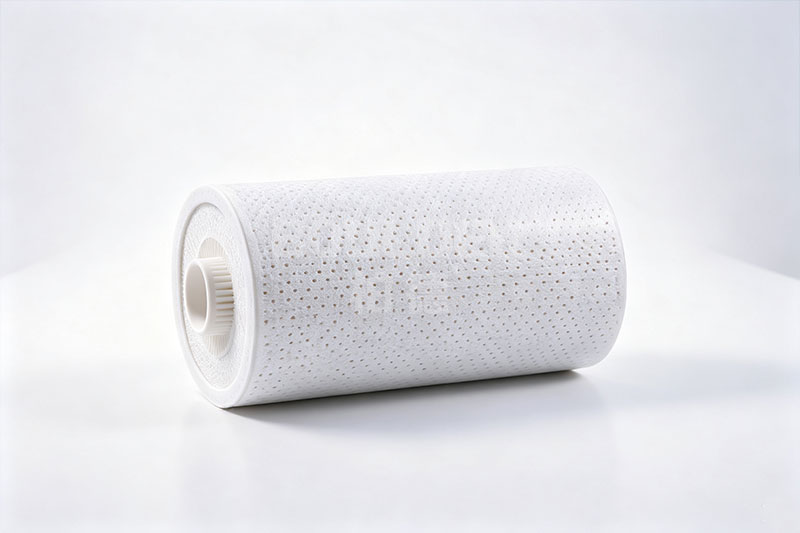
Lianyungang Boulder Industrial Co., Ltd.'s Perforated nonwoven fabric: A functional material in which regular or irregular microporous structures are formed on the surface of nonwoven fabric through processes such as mechanical processing, hot pressing, hydroentangling, or needle rollers. This improves breathability, enhances airflow, improves softness, and enhances dryness and comfort.
Perforated nonwoven fabric product process: Nonwoven fabric substrate → Mechanical processing, hot pressing, etc. → Winding.
Applications of perforated nonwoven fabric: Diaper top layer, adult incontinence pad top layer.